Why Your Air Fryer Food Isn't Crispy — and Exactly How to Fix It
Published on 2026-06-02chuan
Soggy fries? Pale chicken skin? Your air fryer can do better. We tested the most common crispiness killers and found specific, tested fixes for each one.
The Real Reason Your Food Is Not Crispy
Crispiness in an air fryer comes from two things working together: intense dry heat and rapid moisture removal. When either of these is compromised, you get soggy results. After testing the same foods under different conditions — different amounts of oil, different basket loads, different preheating methods, different temperatures — I identified seven specific factors that consistently determine whether food comes out crispy or disappointing. The good news: every single one is fixable. The bad news: if you are getting several of them wrong at once, which is common with new air fryer owners, the results can be bad enough to make you think the appliance itself does not work. It does work. You just need to fix a few things in your process. Here is the complete diagnostic checklist, tested and verified across multiple air fryer models and dozens of food types.
Problem 1: Too Much Food in the Basket
This is the number one cause of soggy air fryer food. When food is packed tightly or stacked, the hot air cannot circulate around each piece. The pieces on top get direct heat. The pieces underneath get steamed by the moisture released from the food above them. You end up with a mix of burnt and soggy pieces — the worst possible outcome. The fix: cook in a single layer with visible space between pieces. For most basket air fryers, the basket should be no more than half full. Yes, this means smaller batches. Yes, it takes longer. But the difference in crispiness between a half-full basket and a packed basket is dramatic. I tested this with frozen french fries: half-full basket produced uniformly golden, crispy fries. Three-quarters full produced fries that were crispy on top and pale and soft on the bottom. Completely full produced fries that were mostly soft with a few burnt ones on top. If you need to cook a large quantity, do it in batches and keep the first batch warm in a 200-degree oven while the second batch cooks.
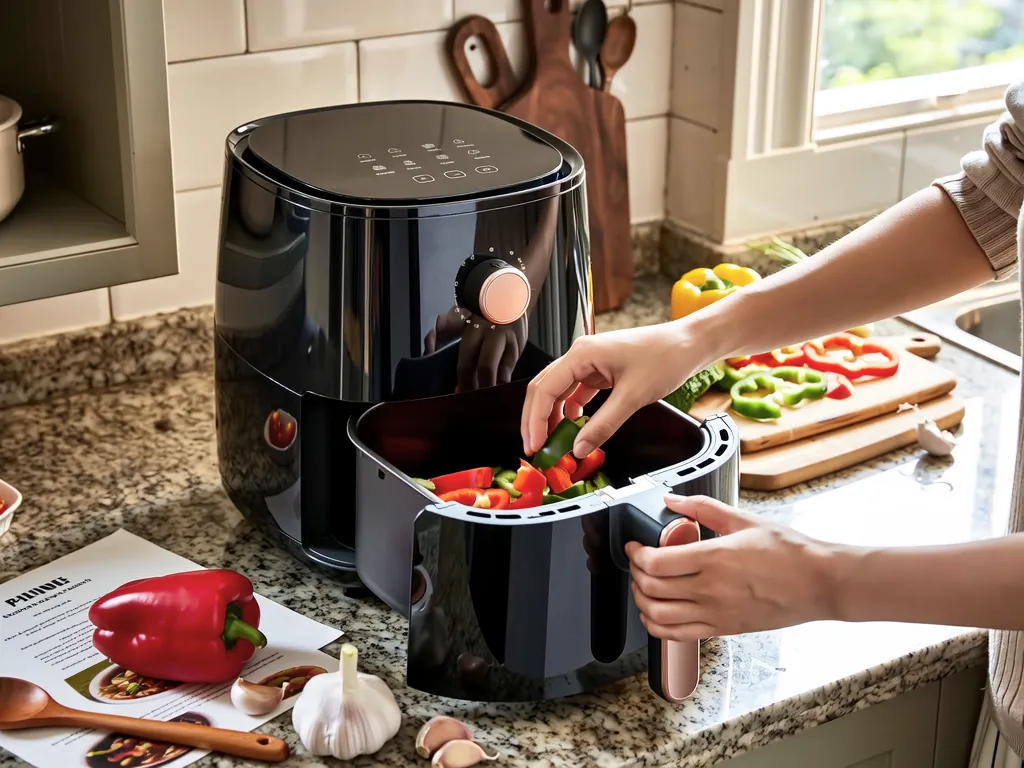
Problem 2: Wet Food Going into the Basket
The air fryer removes moisture — that is how it creates crispiness. But it can only remove so much moisture in a given time. If your food goes in wet, the first several minutes of cooking are spent just evaporating surface water. During that time, the food is essentially steaming, not crisping. By the time the surface dries out, the food might be overcooked. The fix: pat food dry before cooking. For proteins — chicken, steak, fish, tofu — use paper towels to thoroughly dry the surface. For vegetables that have been washed, spin them in a salad spinner or pat them dry. Do not skip this step. For marinated foods, wipe off excess marinade before cooking — a thin coating is fine, but pools of liquid will steam the food. For frozen foods, shake off any loose ice crystals before putting them in the basket. Those ice crystals turn directly into steam and soften the coating. One exception: some foods benefit from a light spritz of water to create initial steam that helps the interior cook before the exterior crisps. This is a more advanced technique and not needed for most everyday cooking.
Problem 3: Oil Problems — Too Little, Too Much, or Wrong Kind
Oil is essential for crispiness. It conducts heat from the hot air to the food surface more efficiently than air alone, promoting even browning. Without any oil, food browns unevenly and can taste dry rather than crispy. With too much oil, food becomes greasy and the excess oil pools in the bottom of the basket and smokes. The sweet spot: a light, even coating — about a teaspoon of oil per serving for most foods. I use a refillable pump sprayer filled with avocado oil. Two or three pumps over a bowl of food, toss, and cook. The oil should be barely visible, just a light sheen. Avoid aerosol cooking sprays. The propellant chemicals in these sprays can damage non-stick coatings. This is not a myth — most air fryer manuals explicitly warn against aerosol sprays. Avocado oil is my preferred oil for air frying because it has a high smoke point — about 520 degrees Fahrenheit — which means it will not smoke at air fryer temperatures. Olive oil works but has a lower smoke point and can produce slight off-flavors if the temperature is high. Peanut oil and grapeseed oil are also good choices. Butter burns at air fryer temperatures, so use it for flavor after cooking, not as a cooking fat.
Problem 4: Skipping the Preheat
I addressed this in the mistakes guide, but it bears repeating in the context of crispiness specifically. Crispiness requires immediate, intense heat to drive off surface moisture before the interior overcooks. A preheated air fryer delivers that instant blast. A cold-start air fryer gradually warms up, during which time the food surface releases moisture into still air rather than having it immediately carried away by hot moving air. The difference is most noticeable with frozen fries and breaded foods. Preheated: crispy in 10 minutes. Not preheated: soft at 10 minutes, starting to crisp at 12, but now slightly overcooked inside. Preheat for 3 minutes at the cooking temperature or slightly higher. For example, if cooking at 375 degrees, preheat at 400 for 3 minutes, then lower to 375 when you add the food. The exception is fatty foods like bacon, which benefit from a cold start — the gradual heat renders more fat from the bacon, which then fries the meat from the inside.
Problem 5: Not Shaking or Flipping
The air fryer's heat is directional — it comes from above, and the airflow helps distribute it, but the food closest to the heating element always gets more intense heat. Without shaking or flipping, you get food that is browned on top and pale on the bottom. For small items: shake the basket vigorously at the halfway point. Do not just stir — you want the food to actually tumble and rearrange. For larger items: flip each piece with tongs. For delicate items like fish: you can skip flipping since they are thin enough to cook through from one side. Set a timer specifically for the midway point — I use my phone — because it is easy to forget when you are preparing other parts of the meal.
The Quick Diagnostic Checklist
If your food came out less crispy than you wanted, run through this checklist before assuming the air fryer is the problem. Did you preheat for at least 3 minutes? Was the basket no more than half full? Was the food patted dry before cooking? Did you use a light coating of oil? Did you shake or flip at the halfway point? Did you cook at the right temperature for the specific food — not just 400 degrees for everything? Most crispiness problems are solved by fixing one or more of these factors. It took me a couple of weeks of experimenting to get consistently crispy results, and now that I understand the principles, I rarely have a disappointing batch. Use our Time Finder tool to look up the tested temperature and time for whatever you are cooking — each food in our database was tested for optimal crispiness at the listed settings.
Frequently Asked Questions
Can I make food crispy without any oil?
You can, but it will not be as crispy as with a light coating of oil. Oil helps conduct heat to the food surface and promotes even browning. A teaspoon of oil adds about 40 calories and makes a noticeable difference in texture.
Does a higher wattage air fryer make food crispier?
Higher wattage means more power and often a stronger fan, which can produce crispier results in less time. But technique — not overcrowding, preheating, using oil — matters more than wattage for crispiness.
Why is my breaded food not crispy on the bottom?
The bottom of breaded food sits against the basket and gets less direct airflow. Flip breaded items halfway through cooking, and consider using a wire rack that elevates food for better all-around airflow.
Want to convert your own recipes? Use our free air fryer calculator.
Air Fryer Calculator