Air Fryer vs Oven: When to Use Which (Honest Guide from Someone Who Uses Both Daily)
Published on 2026-06-12chuan
Air fryer or conventional oven? Not everything belongs in the air fryer. An honest, side-by-side comparison covering speed, texture, capacity, energy use, and which foods work best in each.
I Have Both. Here Is What I Actually Use
I own a full-size electric oven and two air fryers — a 6-quart basket model and a larger oven-style unit. For the first month after buying my first air fryer, I used it for everything. It was new, it was fast, and I was genuinely excited about how crispy it made things. Then the novelty wore off and I started being more practical. Now, after a year of using both appliances regularly, I reach for the air fryer about 70 percent of the time for everyday cooking, and the oven for the remaining 30 percent. The dividing line is not as simple as 'air fryer is better.' It depends on what you are cooking, how many people you are feeding, and what texture you want. This guide is based on my actual experience — not marketing claims, not theoretical comparisons. I have burned things in both, undercooked things in both, and figured out over time which tool to use for which job.
Speed: The Air Fryer Wins, but Not as Much as Advertised
Everyone says air fryers cook 20 to 30 percent faster than ovens. In my experience, the real number is closer to 30 to 50 percent faster when you include preheating time. My conventional oven takes about 12 to 15 minutes to preheat to 400 degrees Fahrenheit. My air fryer takes 3 minutes. That is a 10-minute head start before cooking even begins. Then the actual cooking time is typically 20 to 25 percent shorter. So a dish that takes 45 minutes total in the oven — 15 minutes preheat plus 30 minutes cooking — takes about 27 minutes in the air fryer — 3 minutes preheat plus 24 minutes cooking. That is a 40 percent time savings. But here is the catch: the air fryer has much less capacity. If I am cooking for two people, the air fryer is faster overall. If I am cooking for four or more, I might need to do two batches in the air fryer, which eliminates the time advantage. The oven can cook a whole sheet pan of food at once. The air fryer can cook roughly a third to half as much per batch. For a family of four or more, the oven often wins on total time when you factor in batch cooking.
Texture: Where the Air Fryer Really Shines
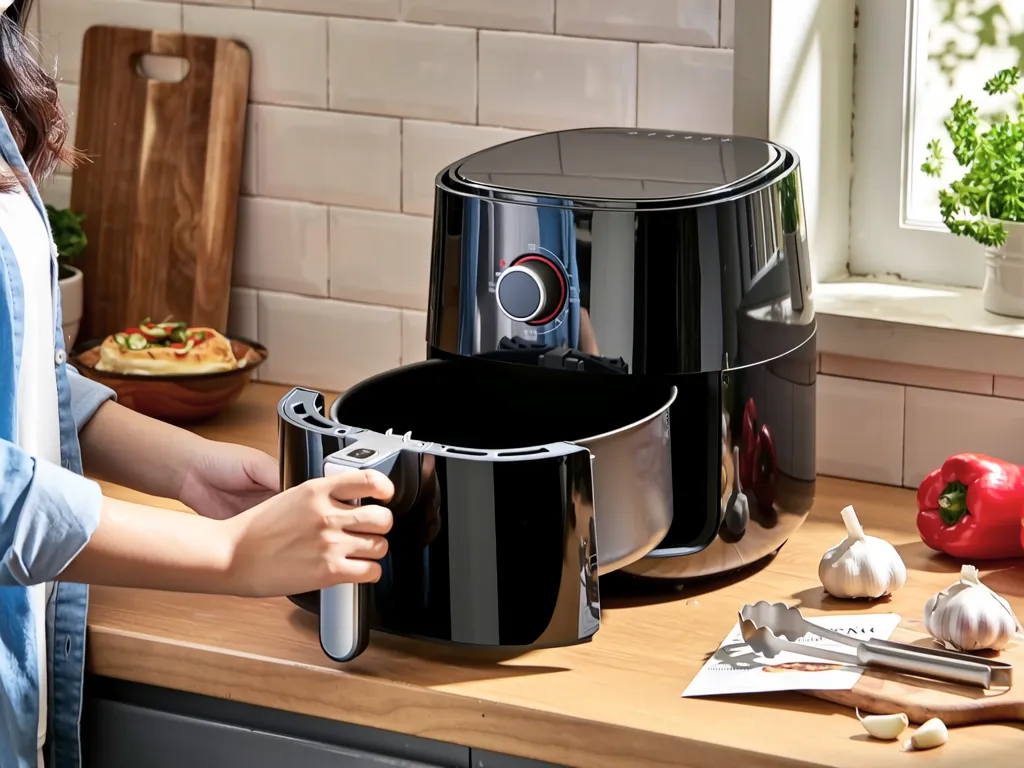
Air fryers produce crispier results than conventional ovens for most foods. This is not marketing — it is physics. The smaller chamber means more concentrated heat. The powerful fan moves air faster than an oven's convection fan — typically 2 to 3 times faster. And the basket design allows air to reach the bottom of the food, unlike a flat baking sheet where the bottom stays in contact with hot metal while the top gets heated air. For frozen fries, chicken wings, Brussels sprouts, and anything breaded, the air fryer produces noticeably better texture than a conventional oven. I have done side-by-side tests — same frozen fries, same temperature, same time — and the air fryer batch was crispier and more evenly browned every time. The oven-baked fries were acceptable, but they had soft spots where the fries touched the baking sheet. The air fryer fries were crispy all around. For roasted vegetables, the difference is smaller but still noticeable. Air-fried broccoli has darker, crispier edges than oven-roasted broccoli at the same temperature. For baked goods — cookies, muffins, quick breads — the conventional oven generally produces more even results because the gentler, more diffuse heat allows the center to set before the edges over-brown.
When the Oven Is Actually Better
There are specific situations where I always choose the oven over the air fryer. Feeding a crowd: if I am making food for more than four people, the oven's capacity wins. A full sheet pan can hold twice what my largest air fryer basket can. Large roasts: a whole chicken or a pork shoulder fits in the oven but may not fit in a basket-style air fryer. Oven-style air fryers handle larger items better but still have limited height. Wet or covered dishes: casseroles, braises, and anything cooked in a covered dish with liquid works better in an oven where you are not relying on airflow for heat transfer. Delicate baked goods: soufflés, cheesecakes, and custards need gentle, even, indirect heat. The air fryer's intense convection can cause them to rise unevenly or develop a tough outer layer. Multiple dishes at once: if dinner is roast chicken plus roasted potatoes plus roasted vegetables, the oven can do all three simultaneously on different racks. The air fryer would need three separate batches. Bread baking: a loaf of bread or a batch of dinner rolls does better in the oven because the larger chamber provides more even heat and the steam environment is easier to control.
Energy Use: The Air Fryer Saves Real Money
This is an under-discussed advantage of air fryers that matters more as energy prices rise. A typical air fryer uses 1400 to 1800 watts and runs for 15 to 25 minutes per cook. A typical electric oven uses 2000 to 5000 watts and runs for 45 to 90 minutes including preheating. The air fryer uses less power and for less time. Rough math: an air fryer cooking for 20 minutes at 1500 watts uses about 0.5 kilowatt-hours. An oven cooking for 60 minutes at 3000 watts uses about 3 kilowatt-hours. At average electricity rates, that is about 6 times more energy for the oven. Over a year of daily cooking, the savings from using an air fryer instead of the oven for appropriate meals could be meaningful. In summer, there is an additional benefit: the air fryer puts out much less waste heat than the oven. Using the oven in July noticeably heats up the kitchen. The air fryer barely affects room temperature. For anyone in a small apartment without air conditioning, this alone might justify the purchase.
The Bottom Line
If you cook for one or two people most of the time, an air fryer will probably become your primary cooking appliance. It is faster, produces better texture for most foods, and uses less energy. The oven becomes your tool for large batches, special occasions, and specific dishes that need gentle or indirect heat. If you cook for a family, the air fryer is still worth having — it is your go-to for quick sides, reheating, and small-batch cooking — but the oven remains your workhorse. Neither appliance replaces the other completely. The best kitchen setup, if you have the space and budget, is both. Use our Time Finder to look up specific air fryer temperatures and times for whatever you are cooking — it gives you the exact tested settings rather than a generic conversion.
Frequently Asked Questions
Does an air fryer really replace an oven?
For 70 to 80 percent of everyday cooking for 1 to 2 people, yes. For large batches, whole roasts, bread baking, and delicate baked goods, a conventional oven is still better.
Is an air fryer just a small convection oven?
Yes, fundamentally. But the smaller size and more powerful fan produce noticeably crispier results than a full-size convection oven. The basket design also allows better airflow around the bottom of food.
How much money does an air fryer save on electricity?
An air fryer uses roughly one-sixth the energy of a full-size electric oven for a typical cooking session. Over a year of daily use, this can save a meaningful amount on electricity bills.
Want to convert your own recipes? Use our free air fryer calculator.
Air Fryer Calculator